Ear piercing is one of the most popular forms of body modification worldwide. From simple lobe piercings to elaborate cartilage designs, ear piercings allow individuals to express their personality, style, and cultural identity. In this comprehensive guide, we will explore everything about piercing ears, including types, benefits, risks, aftercare, and tips to ensure a safe and stylish experience.
What Is Ear Piercing?
Ear piercing is a process of creating a small hole in the ear to insert jewelry, such as studs, hoops, or rings. While ear piercing has been practiced for centuries in various cultures, modern piercing techniques prioritize hygiene, precision, and minimal pain.
Ear piercing can be purely aesthetic, but it also has cultural, religious, and even therapeutic significance in some traditions. For example, in Ayurveda, certain ear points are believed to promote health and well-being.
Types of Ear Piercings
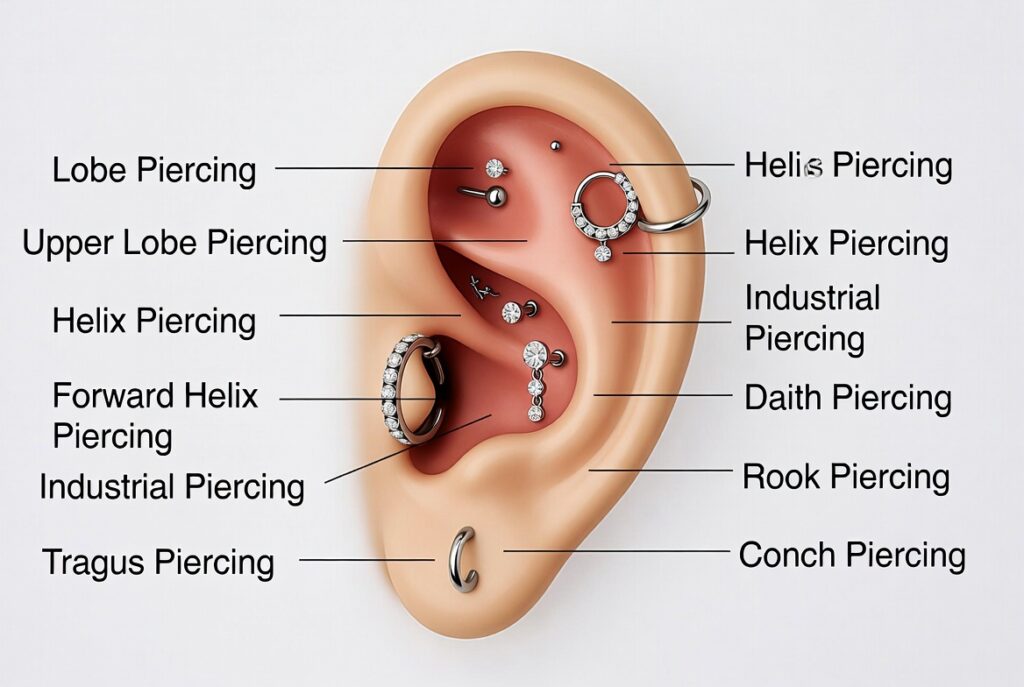
There are multiple types of ear piercings, each with unique placement and style. Choosing the right type depends on personal preference, pain tolerance, and lifestyle.
1. Lobe Piercing
The most common and widely accepted ear piercing. Lobe piercings are relatively painless and heal faster compared to other types. Jewelry options include studs, hoops, and dangling earrings.
2. Upper Lobe Piercing
This is placed slightly above the standard lobe piercing. It allows multiple piercings along the lobe for a layered jewelry effect.
3. Helix Piercing
Located on the upper cartilage of the ear, helix piercings are stylish and modern. Healing may take longer than lobe piercings due to the tougher cartilage tissue.
4. Forward Helix Piercing
This piercing is placed on the front rim of the ear. It offers a unique look and allows for multiple jewelry pieces along the forward helix.
5. Industrial Piercing
An industrial piercing involves two cartilage piercings connected with a single barbell. It’s bold, edgy, and requires careful healing.
6. Tragus Piercing
The tragus is the small flap in front of the ear canal. Tragus piercings are trendy and provide a subtle yet stylish look.
7. Daith Piercing
Located in the innermost cartilage fold, daith piercings are known for their unique appearance. Some people even claim it may reduce migraines, although scientific evidence is limited.
8. Rook Piercing
The rook piercing is on the inner ridge of the ear. It’s a bold choice and can enhance overall ear aesthetics.
9. Conch Piercing
Placed in the middle cartilage, conch piercings can be either inner or outer. They allow hoops and studs for a standout appearance.
Benefits of Ear Piercing
1. Aesthetic Appeal
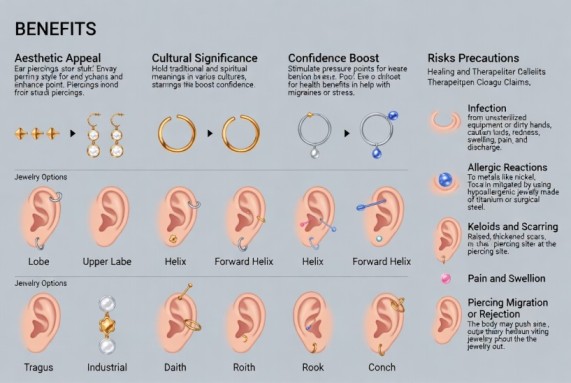
Ear piercings enhance personal style and allow for creative self-expression. They can complement fashion trends and individual personality.
2. Cultural Significance
In many cultures, ear piercings hold traditional and spiritual meanings. For example, in South Asia, ear piercing ceremonies are celebrated as rites of passage for children.
3. Confidence Boost
Wearing jewelry in the ear can make people feel more confident and stylish. It can also highlight facial features effectively.
4. Healing and Therapeutic Claims
Some believe that specific ear piercings, like the daith or tragus, stimulate pressure points that can help with health issues, including migraines or stress.
Risks and Precautions
While ear piercing is generally safe when done professionally, there are risks if hygiene and care are ignored.
1. Infection
Using unsterilized equipment or touching the piercing with dirty hands can cause bacterial infections. Symptoms include redness, swelling, pain, and discharge.
2. Allergic Reactions
Some people may be allergic to metals like nickel. Choosing hypoallergenic jewelry made of titanium or surgical steel reduces this risk.
3. Keloids and Scarring
Some individuals are prone to keloid formation—raised, thickened scars at the piercing site.
4. Pain and Swelling
Pain is inevitable, especially in cartilage piercings. Swelling is common during the initial healing phase.
5. Piercing Migration or Rejection
Sometimes, the body may push the jewelry out, causing migration or rejection of the piercing.
Aftercare Tips for Ear Piercing
Proper aftercare is crucial for healing and avoiding complications.
Clean Regularly: Use saline solution or antiseptic recommended by the piercer.
Avoid Touching: Don’t touch or rotate jewelry unnecessarily to prevent bacteria transfer.
Choose Proper Jewelry: Use high-quality, hypoallergenic materials.
Avoid Swimming: Pools, lakes, and hot tubs can introduce bacteria during the initial healing period.
Sleep Carefully: Avoid sleeping on the newly pierced ear to prevent irritation.
Watch for Infection: Redness, swelling, or pus may indicate infection. Consult a doctor if symptoms persist.
You can certainly see your expertise within the work you write. The sector hopes for more passionate writers such as you who aren’t afraid to say how they believe. At all times go after your heart.