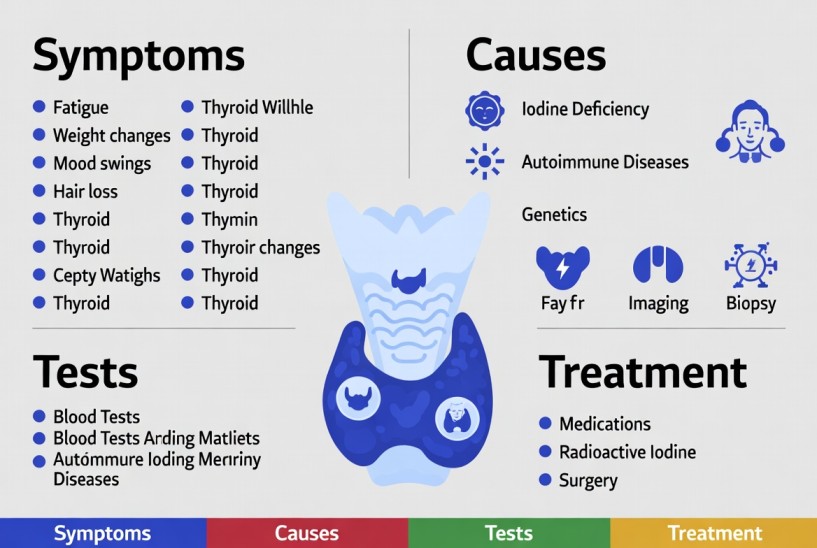
Thyroid Disease: What Is the Thyroid Gland?
(Introduction)
The thyroid is a small, butterfly-shaped gland located at the front of the neck. It produces hormones that regulate metabolism, energy levels, heart rate, body temperature, mood, and weight.
When the thyroid gland produces too little or too much hormone, it leads to a medical condition known as thyroid disease, which causes multiple physical and mental symptoms.
⚠️ Types of Thyroid Disorders
There are two main types of thyroid problems:
1️⃣ Hypothyroidism
When the thyroid gland produces too little hormone.
2️⃣ Hyperthyroidism
When the thyroid gland produces too much hormone.
Each condition has different symptoms and health effects.
🔵 Hypothyroidism Symptoms (Low Thyroid Hormone)
Common symptoms of hypothyroidism include:
Constant fatigue and weakness
Weight gain without increased food intake
Feeling cold more often
Hair thinning or hair loss
Dry and rough skin
Depression or low mood
Memory problems
Slow heart rate
Irregular menstrual cycles
Constipation
Swelling of face or neck
Excessive sleepiness
Muscle pain or stiffness
Hoarse voice
Low libido
🔴 Hyperthyroidism Symptoms (Overactive Thyroid)
Symptoms of hyperthyroidism may include:
Sudden weight loss
Rapid or irregular heartbeat
Excessive sweating
Heat intolerance
Anxiety or nervousness
Tremors in hands
Difficulty sleeping
Increased appetite
Frequent bowel movements or diarrhea
Menstrual disturbances
Hair thinning
Muscle weakness
Mood swings
Bulging eyes (Graves’ disease)
Restlessness and fatigue
👩⚕️ Who Is at Higher Risk of Thyroid Disease?
Thyroid disorders are more common in:
Women
People over 30 years of age
Those with a family history of thyroid disease
Post-pregnancy women
Individuals with high stress levels
People with iodine imbalance
🧪 Thyroid Tests and Diagnosis
Doctors usually recommend the following tests:
TSH (Thyroid Stimulating Hormone) Test
T3 Test
T4 Test
Thyroid Ultrasound
Thyroid Antibody Test (for autoimmune thyroid disease)
A simple blood test can accurately diagnose thyroid problems.
💊 Thyroid Treatment Options
Treatment depends on the type of thyroid disorder:
Hypothyroidism Treatment:
Daily thyroid hormone replacement (Levothyroxine)
Regular blood monitoring
Lifestyle and dietary improvements
Hyperthyroidism Treatment:
Anti-thyroid medications
Radioactive iodine therapy
Surgery in severe cases
⚠️ Never take thyroid medication without medical supervision.
🥗 Diet and Lifestyle for Thyroid Health
Recommended Foods:
Iodized salt
Eggs
Fish and seafood
Fruits and vegetables
Adequate water intake
Foods to Limit:
Junk and processed foods
Smoking
Excess soy products
High caffeine intake
❓ Frequently Asked Questions (FAQs)
Q1: Can thyroid disease be cured?
Thyroid disorders are usually manageable, and symptoms can be controlled with proper treatment.
Q2: Does thyroid affect fertility?
Yes, untreated thyroid problems can cause fertility issues in both men and women.
Q3: Is thyroid a lifelong condition?
In many cases, thyroid disorders require long-term or lifelong management.
Q4: Can thyroid cause weight changes?
Yes, thyroid hormones directly affect metabolism and body weight.
📞 When Should You See a Doctor?
Consult a doctor if you experience:
Persistent fatigue
Sudden weight changes
Irregular heartbeat
Menstrual irregularities
Anxiety or depression without clear cause
Early diagnosis helps prevent serious complications.
🔔 Call to Action (CTA)
👉 Get your thyroid levels tested today
👉 Book an online doctor consultation-03339025207
👉 Early treatment can protect your long-term health