A PCOS Diet Plan is one of the most effective lifestyle strategies for managing Polycystic Ovary Syndrome (PCOS). Following a balanced PCOS Diet Plan may help improve insulin resistance, regulate blood sugar levels, support healthy weight management, reduce inflammation, and improve hormone balance. Although there is no single diet that works for everyone with PCOS, research consistently supports diets rich in whole foods, lean protein, healthy fats, fiber, and low-glycemic carbohydrates as part of first-line management.
What Is a PCOS Diet Plan?
A PCOS Diet Plan is an eating pattern designed to support women with Polycystic Ovary Syndrome by improving insulin sensitivity and providing balanced nutrition. Many people with PCOS have insulin resistance, so choosing foods with a lower glycemic impact and plenty of fiber may help manage symptoms. Current evidence favors sustainable dietary patterns over restrictive fad diets.
PCOS Diet Plan Benefits
Following a healthy PCOS Diet Plan may help:
- Improve insulin sensitivity
- Support healthy weight management
- Promote regular menstrual cycles
- Reduce inflammation
- Improve cholesterol levels
- Support fertility in some women
- Increase energy levels
- Reduce sugar cravings
- Improve digestive health
- Support overall hormonal health
Benefits vary from person to person, and diet should complement—not replace—medical care.
Best Foods to Eat in a PCOS Diet Plan
Choose foods such as:
- Green leafy vegetables
- Broccoli
- Cauliflower
- Bell peppers
- Oats
- Brown rice
- Quinoa
- Lentils
- Chickpeas
- Beans
- Salmon
- Eggs
- Chicken breast
- Greek yogurt
- Cottage cheese
- Avocado
- Almonds
- Walnuts
- Chia seeds
- Flax seeds
- Olive oil
- Berries
- Apples
- Oranges
These foods provide fiber, healthy fats, vitamins, minerals, and protein that support metabolic health.
Foods to Avoid in a PCOS Diet Plan
Limit or avoid:
- Sugary drinks
- Soft drinks
- White bread
- White rice
- Cakes
- Cookies
- Candy
- Fast food
- Deep-fried foods
- Processed meats
- Highly processed snacks
- Excess added sugar
Reducing refined carbohydrates and added sugars may help improve blood sugar control.
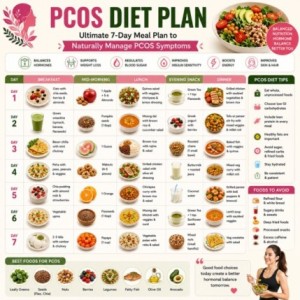
7-Day PCOS Diet Plan
Day 1
Breakfast: Oatmeal with berries and chia seeds
Snack: Apple and almonds
Lunch: Grilled chicken with brown rice and vegetables
Snack: Greek yogurt
Dinner: Baked salmon with broccoli
Day 2
Breakfast: Vegetable omelet
Snack: Walnuts
Lunch: Quinoa salad with chickpeas
Snack: Orange
Dinner: Grilled fish with vegetables
Day 3
Breakfast: Greek yogurt with berries
Snack: Mixed nuts
Lunch: Lentil soup
Snack: Carrot sticks
Dinner: Chicken with roasted vegetables
Day 4
Breakfast: Avocado toast on whole-grain bread
Snack: Pear
Lunch: Grilled turkey salad
Snack: Cottage cheese
Dinner: Stir-fried tofu with vegetables
Day 5
Breakfast: Smoothie with spinach, berries, and yogurt
Snack: Pumpkin seeds
Lunch: Brown rice with grilled chicken
Snack: Apple
Dinner: Baked salmon and asparagus
Day 6
Breakfast: Scrambled eggs with spinach
Snack: Mixed berries
Lunch: Chickpea salad
Snack: Greek yogurt
Dinner: Grilled shrimp with quinoa
Day 7
Breakfast: Oatmeal with flax seeds
Snack: Almonds
Lunch: Turkey wrap with vegetables
Snack: Cottage cheese
Dinner: Grilled chicken with roasted vegetables
PCOS Diet Plan for Weight Loss
A PCOS Diet Plan for weight loss should emphasize:
- High-fiber foods
- Lean protein
- Healthy fats
- Portion control
- Regular meal timing
- Plenty of water
There is no single best diet for every person with PCOS, but sustainable eating habits and regular physical activity are consistently recommended.
Lifestyle Tips
- Exercise for at least 150 minutes weekly.
- Sleep 7–9 hours each night.
- Manage stress through relaxation techniques.
- Stay hydrated.
- Avoid smoking.
- Follow your doctor’s treatment plan.
- Have regular medical check-ups.
Lifestyle changes work best when combined with appropriate medical guidance.
Frequently Asked Questions
What is the best PCOS Diet Plan?
A balanced eating pattern rich in vegetables, lean protein, healthy fats, and low-glycemic carbohydrates is commonly recommended.
Can a PCOS Diet Plan help with weight loss?
Yes, it may support weight management when paired with regular exercise and an overall calorie intake that matches your goals.
Which fruits are good for PCOS?
Berries, apples, oranges, pears, and kiwi are nutritious options that can fit into a balanced diet.
Can I eat rice with PCOS?
Yes. Whole grains such as brown rice are generally preferred over refined grains because of their higher fiber content.
Is intermittent fasting good for PCOS?
Some studies suggest it may help certain people, but the evidence is still evolving. It is best to discuss it with your healthcare provider or a registered dietitian before starting.
Need Expert Medical Advice?
A PCOS Diet Plan can be an important part of managing PCOS, but it should not replace professional medical advice. If you have irregular periods, difficulty conceiving, unexplained weight gain, acne, or other symptoms of PCOS, consult a qualified healthcare professional for personalized evaluation and treatment.
To book an appointment with our doctor, contact us on WhatsApp: +92 333 9025207.
Conclusion
A well-balanced PCOS Diet Plan can play a valuable role in managing insulin resistance, supporting hormone balance, improving energy levels, and promoting long-term health. Rather than following restrictive fad diets, focus on sustainable eating habits built around whole foods, lean protein, healthy fats, and fiber. For the best results, combine healthy eating with regular physical activity and follow the guidance of your healthcare provider.
SEO Note: This draft is structured so the focus keyword “PCOS Diet Plan” appears naturally throughout the title, introduction, headings, body, FAQs, and conclusion, helping you avoid the low keyword-density issue you experienced previously.
Hey, you used to write great, but the last several posts have been kinda boring… I miss your tremendous writings. Past few posts are just a bit out of track! come on!